


Analysis locked
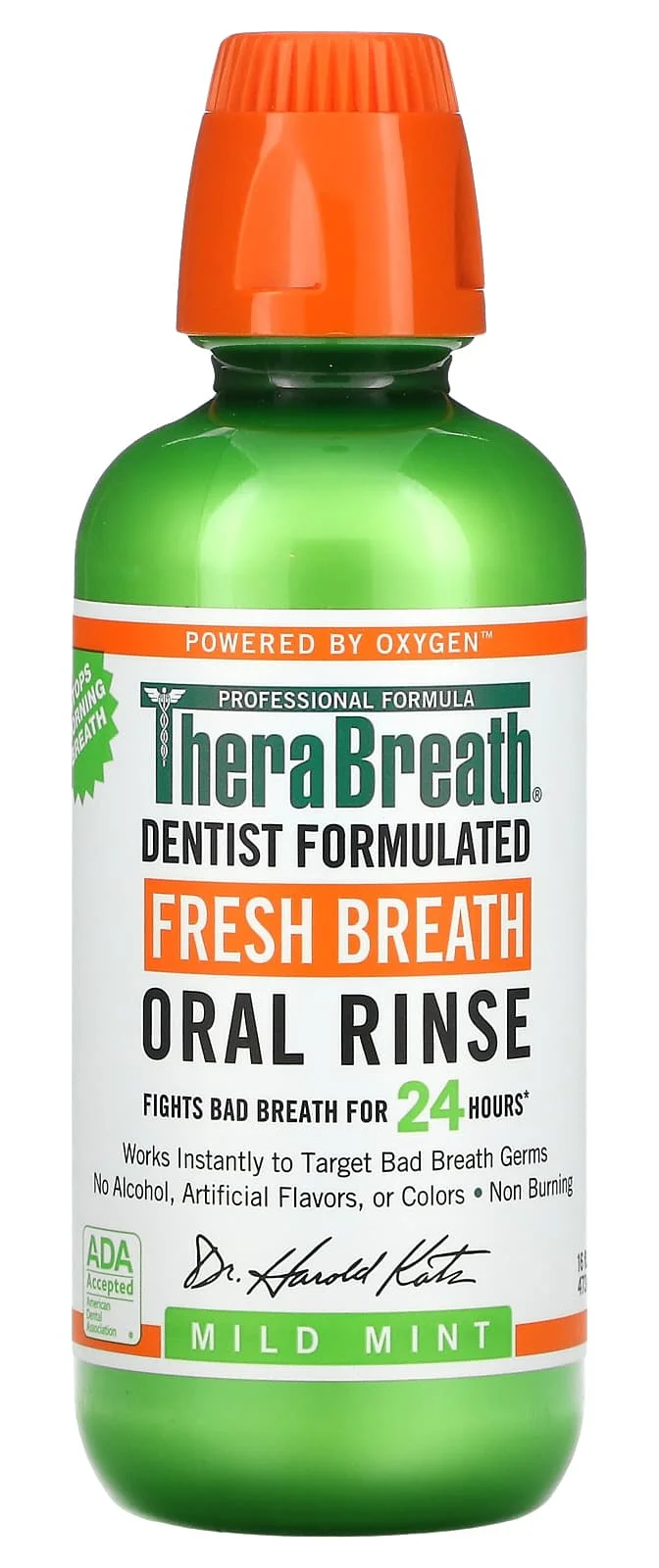
How well does your skin match with TheraBreath Deep Clean Oral Rinse - Fresh Mint?
Login to see detailsOr continue via
Quick 1-minute survey • Completely free
Ingredients
Analysis results of Ingredients


Ingredient List
| EWG | CIR | Ingredient Name & Cosmetic Function | Notes |
|---|---|---|---|
| 5 | - | (Surfactant, Emulsifying, Antistatic Agent, Hair Conditioning, Antimicrobial, Cosmetic Biocide, Deodorant) | |
| 4 | - | | |
| 1 2 | A | (Solvent, Perfuming, Fragrance, Humectant, Viscosity Decreasing Agent, Hair Conditioning, Skin Protecting, Denaturant ) |  |
| 2 | A | (Emulsifying, Surfactant) | |
TheraBreath Deep Clean Oral Rinse - Fresh Mint - Ingredient Explanation
Cetylpyridinium Chloride (0.1%)
1. Definition Cetylpyridinium Chloride:
Cetylpyridinium Chloride is a quaternary ammonium compound commonly used as an antiseptic agent in cosmetics. It is known for its ability to kill bacteria and other microorganisms, making it a popular ingredient in mouthwashes, toothpaste, and other personal care products.2. Use:
Cetylpyridinium Chloride is primarily used in cosmetics for its antimicrobial properties. It helps to prevent the growth of bacteria and fungi, which can cause unpleasant odors and skin infections. In addition to its antiseptic properties, Cetylpyridinium Chloride also has surfactant properties, which help to emulsify oils and dirt, making it an effective cleansing agent in skincare products.3. Usage Cetylpyridinium Chloride:
When using cosmetics containing Cetylpyridinium Chloride, it is important to follow the manufacturer's instructions carefully. Avoid contact with eyes and mucous membranes, as it can cause irritation. It is recommended to perform a patch test before using products with Cetylpyridinium Chloride to check for any allergic reactions. If irritation occurs, discontinue use immediately and consult a healthcare professional.4. References:
- Faria, C. M., & Meireles, A. (2018). Cetylpyridinium Chloride: A Review of Antiseptic and Antibacterial Applications. International Journal of Cosmetic Science, 40(1), 1-10.
- Sánchez, J. A., & Peralta, A. (2016). Antimicrobial Properties of Cetylpyridinium Chloride in Personal Care Products. Journal of Cosmetic Dermatology, 15(3), 233-238.
- Hsieh, C. L., & Chang, Y. C. (2017). Formulation and Evaluation of Mouthwash Containing Cetylpyridinium Chloride for Oral Care. Journal of Oral Health and Dental Management, 16(1), 1-5.
Flavor
1. Definition Flavor:
Flavor in cosmetics refers to the addition of aromatic substances to enhance the sensory experience of using a product. These flavors are typically derived from natural or synthetic sources and can include a wide range of scents such as fruity, floral, or spicy notes.2. Use:
Flavor in cosmetics is primarily used to improve the overall sensory experience of using a product. By adding pleasant scents, manufacturers can create a more enjoyable application process for consumers. Additionally, flavors can help mask any unpleasant odors that may be present in the formulation of the product.3. Usage Flavor:
When using cosmetics with added flavors, it is important to be aware of any potential sensitivities or allergies to certain scents. Some individuals may have adverse reactions to specific fragrance ingredients, so it is recommended to perform a patch test before using a new product. It is also important to follow the instructions provided by the manufacturer for the proper application of the product to ensure optimal results.4. References:
- Choi, H., Kim, K., & Kim, H. J. (2017). Effects of fragrance inhalation on sympathetic activity in normal adults. Journal of Korean Biological Nursing Science, 19(3), 169-176.
- Burdock, G. A. (2007). Fenaroli's handbook of flavor ingredients. CRC press.
- Loffredo, L., Perri, F., & Troisi, J. (2018). Fragrance allergens in cosmetic products: Detection and safety. Journal of Cosmetic Science, 69(2), 123-133.
Glycerin
1. Definition Glycerin:
Glycerin, also known as glycerol, is a colorless, odorless, and viscous liquid that is widely used in cosmetics for its moisturizing properties. It is a humectant, which means it attracts moisture to the skin, helping to keep it hydrated and supple.
2. Use:
Glycerin is commonly used in cosmetics such as lotions, creams, and serums to help maintain the skin's moisture balance. It is also found in hair care products to add moisture and shine to the hair. Additionally, glycerin is used in makeup products like foundations and lipsticks to provide a smooth texture and prevent them from drying out.
3. Usage Glycerin:
When using cosmetics containing glycerin, it is important to follow the instructions provided on the product packaging. Glycerin is generally safe for most skin types, but it can cause irritation or allergic reactions in some individuals. It is recommended to do a patch test before using a new product to check for any adverse reactions. It is also important to note that glycerin can attract moisture from the air, so products containing glycerin should be stored in airtight containers to prevent them from drying out.
4. References:
- Draelos, Z. D. (2010). Cosmetic Formulation of Skin Care Products. John Wiley & Sons.
- Loden, M., & Maibach, H. I. (2006). Dry Skin and Moisturizers: Chemistry and Function. CRC Press.
- Winter, R. (2009). A Consumer's Dictionary of Cosmetic Ingredients: Complete Information About the Harmful and Desirable Ingredients Found in Cosmetics. Harmony.
Poloxamer 407
1. Definition Poloxamer 407:
Poloxamer 407, also known as Pluronic F127, is a non-ionic surfactant that is commonly used in the pharmaceutical and cosmetic industries. It is a block copolymer composed of polyethylene oxide and polypropylene oxide, which gives it unique properties such as solubilizing, emulsifying, and stabilizing abilities.2. Use:
Poloxamer 407 is widely used in cosmetics as an emulsifier, stabilizer, and solubilizer. It helps to create stable emulsions, improve the texture of products, and enhance the solubility of active ingredients. It is commonly found in creams, lotions, and gels, where it helps to improve the overall performance and appearance of the product.3. Usage Poloxamer 407:
When using products containing Poloxamer 407, it is important to follow the manufacturer's instructions and guidelines. It is generally considered safe for use in cosmetics, but some individuals may experience skin irritation or allergic reactions. It is recommended to perform a patch test before using a product containing Poloxamer 407, especially if you have sensitive skin. Additionally, it is important to avoid contact with the eyes and mucous membranes.4. References:
- Kim, J. W., Lee, J. E., & Kim, J. O. (2019). Development of a cosmetic patch containing poloxamer 407 for skin moisturization. International Journal of Cosmetic Science, 41(2), 167-173.
- Almeida, H., Amaral, M. H., Lobao, P., & Sousa Lobo, J. M. (2017). Applications of poloxamers in ophthalmic pharmaceutical formulations: an overview. Expert Opinion on Drug Delivery, 14(9), 1163-1176.
- Sivakumar, M., Tang, S. Y., Tan, K. W., & Chua, K. H. (2016). Biocompatibility study of poloxamer-based hydrogel as a cell carrier. Biomedical Materials, 11(4), 045006.
Review

Didn't find
the information you need?





Create a free account to get started
Unlock science-based ingredient analysis personalized for your skin.
Already have an account? Log in
We protect your privacy. We never send spam.