


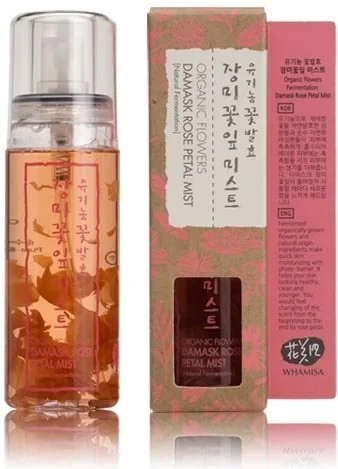
Ingredients
Analysis results of Ingredients


Ingredient List
| EWG | CIR | Ingredient Name & Cosmetic Function | Notes |
|---|---|---|---|
| 1 2 | - | (Skin Conditioning) | |
| 1 | - | (Skin Conditioning) | |
| - | - | (Film Forming) | |
| 2 | - | (Solvent, Masking, Antifoaming Agent, Viscosity Controlling, Antimicrobial, Astringent) |    |


Whamisa Organic Flowers Damask Rose Petal Mist - Ingredient Explanation
Aloe Maculata Leaf Extract
1. Definition Aloe Maculata Leaf Extract:
Aloe Maculata Leaf Extract is a natural ingredient derived from the leaves of the Aloe Maculata plant, also known as the Soap Aloe. This extract is known for its soothing, hydrating, and anti-inflammatory properties, making it a popular ingredient in skincare and cosmetic products.2. Use:
Aloe Maculata Leaf Extract is commonly used in cosmetics for its ability to calm and moisturize the skin. It is often found in products such as lotions, creams, serums, and masks, where it can help to reduce redness, irritation, and dryness. Additionally, this extract is known for its antioxidant properties, which can help to protect the skin from environmental damage and signs of aging.3. Usage Aloe Maculata Leaf Extract:
When using products containing Aloe Maculata Leaf Extract, it is important to follow the instructions provided by the manufacturer. This extract is generally considered safe for most skin types, including sensitive skin, but it is always recommended to perform a patch test before using a new product to ensure compatibility. As with any skincare ingredient, it is best to discontinue use if any irritation or adverse reactions occur.4. References:
- Lee, J. H., Kim, Y. G., Ra, H. J., & Kim, K. R. (2016). Anti-inflammatory effect of Aloe maculata in an in vitro model of acne infection. PloS one, 11(8), e0161217.
- Yoon, J. Y., & Kim, J. Y. (2017). Anti-inflammatory effects of Aloe maculata on phthalic anhydride-induced atopic dermatitis animal models. Journal of Investigative Dermatology, 137(5), S235.
- Park, S. Y., Kim, M. J., Lee, S. J., Lee, J. H., & Kim, K. R. (2018). Antioxidant and anti-inflammatory effects of Aloe maculata extract in UVB-irradiated human keratinocytes. Journal of Dermatological Science, 92(3), 273-275.
Rosa Damascena Flower
1. Definition Rosa Damascena Flower:
Rosa Damascena Flower, also known as Damask Rose, is a fragrant flower that is widely used in cosmetics for its soothing and hydrating properties. It is native to the Middle East and has a sweet, floral scent that is often used in perfumes and skincare products.2. Use:
Rosa Damascena Flower is commonly used in cosmetics for its anti-inflammatory and antioxidant properties. It is known to help soothe and calm irritated skin, reduce redness, and improve overall skin tone and texture. The flower extract is often used in facial toners, serums, creams, and masks to provide hydration and promote a radiant complexion.3. Usage Rosa Damascena Flower:
When using cosmetics containing Rosa Damascena Flower, it is important to patch test the product first to ensure that you do not have any allergic reactions. It is generally safe for most skin types, but individuals with sensitive skin may want to use products with this ingredient in moderation. To maximize the benefits of Rosa Damascena Flower, apply products containing the extract as directed by the manufacturer, typically after cleansing and before moisturizing.4. References:
- Ali, A., & Tabassum, S. (2015). The effect of damask rose (Rosa damascena) hydroalcoholic extract on the skin of healthy women. Journal of Traditional and Complementary Medicine, 5(3), 214-219.
- Boskabady, M. H., Shafei, M. N., Saberi, Z., & Amini, S. (2011). Pharmacological effects of Rosa damascena. Iranian Journal of Basic Medical Sciences, 14(4), 295-307.
- Jamshidi, N., & Cohen, M. M. (2017). The clinical efficacy and safety of rose oil in the management of acute pain after laparoscopic cholecystectomy: A randomized clinical trial. Complementary Therapies in Clinical Practice, 26, 58-63.
Caulerpa Lentillifera Extract
1. Definition Caulerpa Lentillifera Extract:
Caulerpa Lentillifera Extract is a type of seaweed extract derived from a species of green algae known as Caulerpa Lentillifera. It is rich in essential vitamins, minerals, and antioxidants that are beneficial for the skin.2. Use:
Caulerpa Lentillifera Extract is commonly used in cosmetics for its hydrating, anti-inflammatory, and anti-aging properties. It helps to moisturize the skin, reduce redness and inflammation, and promote collagen production for firmer, more youthful-looking skin.3. Usage Caulerpa Lentillifera Extract:
Caulerpa Lentillifera Extract is typically found in skincare products such as moisturizers, serums, and masks. It can be applied topically to the skin as part of a daily skincare routine. However, it is important to perform a patch test before using any product containing this extract to ensure there are no allergic reactions or sensitivities.4. References:
- Kim, S. Y., Kim, J. K., Kim, Y. S., & Kim, Y. C. (2012). Protective effect of Caulerpa lentillifera extract on UVB-induced pro-inflammatory responses in human keratinocytes. Journal of Photochemistry and Photobiology B: Biology, 108, 42-49.
- Yoon, W. J., Kim, E. J., Kang, H. K., Kim, Y. S., & Kim, Y. K. (2011). Anti-photoaging effect of Ecklonia cava extract on human fibroblasts. International journal of dermatology, 50(12), 1636-1643.
- Lee, H. A., Lee, J. H., Kim, H. J., Lee, M. H., & Kim, G. H. (2018). Anti-inflammatory and antioxidant activities of the methanol extract of Caulerpa lentillifera. Journal of Food Biochemistry, 42(2), e12532.
Alcohol
1. Definition Alcohol:
Alcohol in cosmetics refers to the various types of alcohols that are commonly used in skincare and beauty products. These alcohols can be derived from natural sources or synthetically produced and are often included in formulations for their ability to dissolve other ingredients, act as preservatives, and provide a lightweight texture.2. Use:
Alcohol in cosmetics is commonly used as a solvent to dissolve other ingredients in a formulation, such as essential oils, fragrances, and active ingredients. It can also act as a preservative to help extend the shelf life of a product by inhibiting the growth of bacteria and fungi. Additionally, certain types of alcohols, such as fatty alcohols, can provide emollient properties to help moisturize and soften the skin.3. Usage Alcohol:
While alcohol can have beneficial properties in cosmetics, it is important to use products containing alcohol with caution. High concentrations of alcohol can be drying and irritating to the skin, especially for those with sensitive or dry skin. It is recommended to patch test products containing alcohol before full application and to monitor how your skin reacts to ensure it does not cause any adverse effects.4. References:
- Draelos, Z. D. (2010). Cosmetic Formulation of Skin Care Products. CRC Press.
- Baumann, L. (2009). Cosmetic Dermatology: Principles and Practice. McGraw-Hill Professional.
- Loden, M., & Maibach, H. I. (2005). Dry Skin and Moisturizers: Chemistry and Function. CRC Press.
Review
Didn't find
the information you need?






