


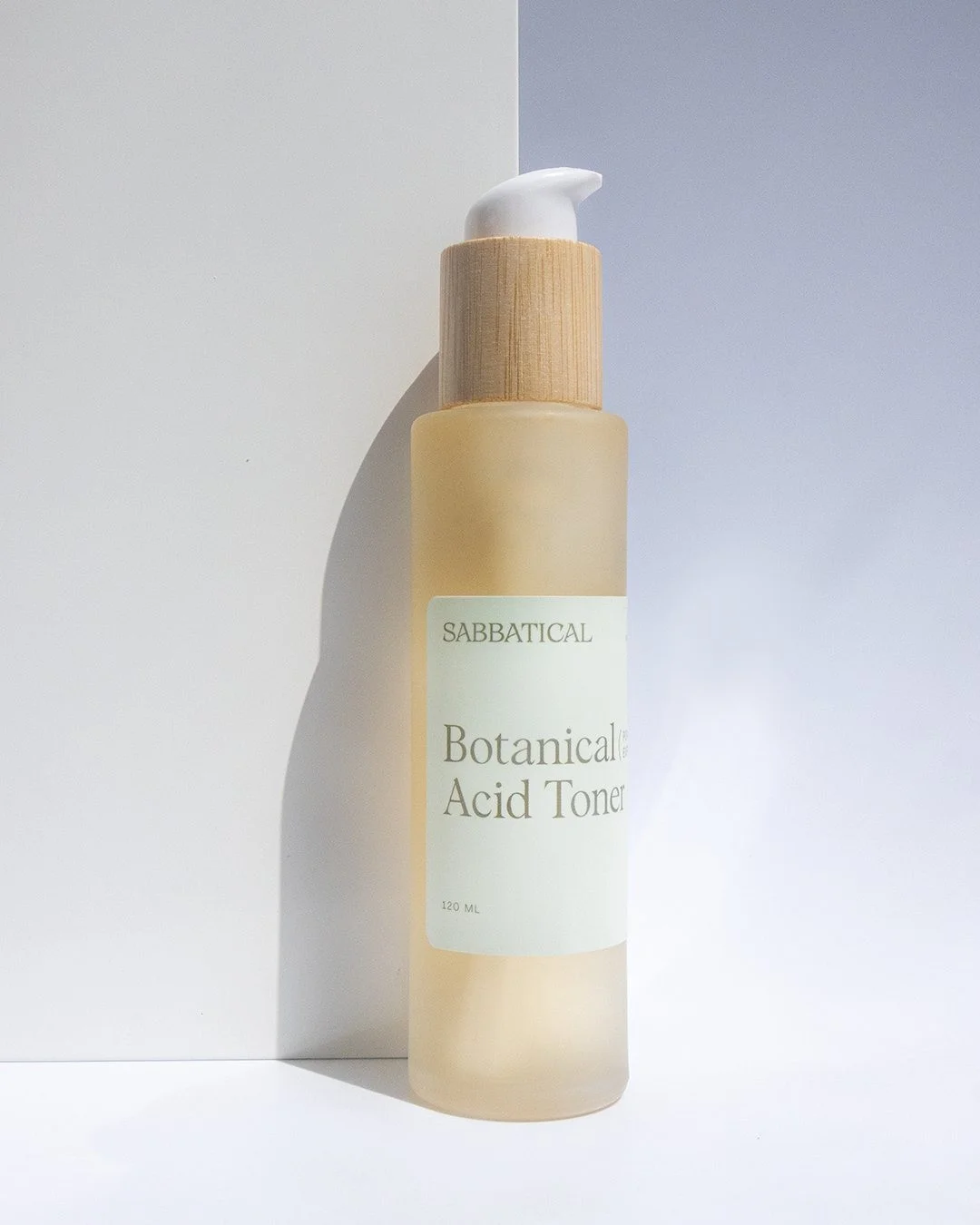
Analysis locked
How well does your skin match with Sabbatical Beauty Botanical Acid Toner?
Login to see detailsOr continue via
Quick 1-minute survey • Completely free
Ingredients
Analysis results of Ingredients


Ingredient List
| EWG | CIR | Ingredient Name & Cosmetic Function | Notes |
|---|---|---|---|
| - | B | (Skin Conditioning) |  |
| 1 | - | (Skin Conditioning) | |
| 1 | - | (Solvent) | |
| 1 | - | |


Sabbatical Beauty Botanical Acid Toner - Ingredient Explanation
Aloe Barbadensis Leaf Juice
1. Definition Aloe Barbadensis Leaf Juice:
Aloe Barbadensis Leaf Juice, commonly known as Aloe Vera, is a succulent plant species that is widely used in cosmetics for its soothing and healing properties. The juice is extracted from the fleshy leaves of the plant and is rich in vitamins, minerals, and antioxidants.2. Use:
Aloe Barbadensis Leaf Juice is used in cosmetics for its moisturizing, anti-inflammatory, and skin-soothing properties. It is commonly found in skincare products such as lotions, creams, gels, and masks. Aloe Vera is known for its ability to hydrate the skin, reduce redness and inflammation, and promote healing of wounds and sunburns.3. Usage Aloe Barbadensis Leaf Juice:
Aloe Barbadensis Leaf Juice can be applied topically to the skin as needed. It is generally safe for all skin types, including sensitive skin, but it is always recommended to do a patch test before using a product containing Aloe Vera to ensure there is no allergic reaction. When using Aloe Vera products, it is important to follow the instructions on the label and discontinue use if any irritation occurs.4. References:
- Surjushe, A., Vasani, R., & Saple, D. G. (2008). Aloe Vera: A short review. Indian Journal of Dermatology, 53(4), 163–166.
- Radha, M. H., Laxmipriya, N. P., & Amin, M. (2015). Aloe Vera: A short review. Indian Journal of Dermatology, 60(3), 260–268.
- Reynolds, T., & Dweck, A. C. (1999). Aloe Vera leaf gel: a review update. Journal of Ethnopharmacology, 68(1-3), 3–37.
Lactobacillus/Arundinaria Gigantea Ferment Filtrate (Bamboo Isoflavones)
1. Definition Lactobacillus/Arundinaria Gigantea Ferment Filtrate:
Lactobacillus/Arundinaria Gigantea Ferment Filtrate is a natural ingredient derived from the fermentation of Lactobacillus bacteria and Arundinaria Gigantea, a type of bamboo plant. This ferment filtrate is rich in probiotics, enzymes, and antioxidants, which can provide numerous benefits for the skin.2. Use:
Lactobacillus/Arundinaria Gigantea Ferment Filtrate is commonly used in skincare products for its ability to nourish and balance the skin's microbiome. It can help improve the skin's barrier function, reduce inflammation, and promote overall skin health. Additionally, this ingredient has moisturizing properties that can help hydrate the skin and improve its elasticity.3. Usage Lactobacillus/Arundinaria Gigantea Ferment Filtrate:
Lactobacillus/Arundinaria Gigantea Ferment Filtrate is typically found in serums, moisturizers, and masks. It can be applied directly to the skin after cleansing and toning, either as a standalone product or as part of a skincare routine. It is recommended to patch test the product first to ensure compatibility with your skin, and to follow the instructions provided by the manufacturer for best results.4. References:
- Kim, H. J., Lee, S. H., & Lee, J. S. (2017). Bamboo shoot (Sasa coreana Nakai) extract fermented with Lactobacillus pentosus B240 suppresses 2,4-dinitrochlorobenzene-induced atopic dermatitis in NC/Nga mice. Journal of Microbiology and Biotechnology, 27(10), 1885-1895.
- Shin, S. H., Kim, J. H., Kim, Y. S., & Oh, J. W. (2018). Anti-inflammatory effect of Lactobacillus pentosus strain S-PT84-mediated fermentation of Houttuynia cordata Thunb extract in lipopolysaccharide-stimulated RAW 264.7 cells. Journal of Microbiology and Biotechnology, 28(4), 589-598.
- Lee, J. S., Lee, S. H., & Kim, H. J. (2019). Fermented bamboo shoot extract with Lactobacillus pentosus B240 suppresses 2,4-dinitrochlorobenzene-induced atopic dermatitis-like skin lesions in NC/Nga mice. Journal of Microbiology and Biotechnology, 29(10), 1677-1687.
Aqua
1. Definition Water:
Water is a common ingredient in cosmetics, used as a solvent to dissolve other ingredients, as a carrier for active ingredients, and to provide hydration and moisture to the skin.2. Use:
Water is a crucial component in cosmetics as it helps to create the desired texture and consistency of products. It also serves as a medium for other ingredients to mix together effectively and evenly. Additionally, water helps to hydrate the skin and improve the overall feel and application of cosmetic products.3. Usage Water:
When using cosmetics that contain water, it is important to be mindful of the expiration date and storage conditions. Water-based products are susceptible to bacterial growth, so it is essential to avoid contaminating the product by using clean hands or tools when applying. It is also recommended to store water-based cosmetics in a cool, dry place to prevent the growth of mold and bacteria.4. References:
- Draelos, Z. D. (2010). Cosmetic dermatology: products and procedures. John Wiley & Sons.
- Winter, R. (2009). A consumer's dictionary of cosmetic ingredients: complete information about the harmful and desirable ingredients found in cosmetics and cosmeceuticals. Crown.
- Begoun, P. (2003). Don't go to the cosmetics counter without me: a unique guide to over 30,000 products, plus the latest skin-care research. Beginning Press.
Salix Alba (Willow) Bark Extract
Definition Salix Alba (Willow) Bark Extract:
Salix Alba (Willow) Bark Extract is derived from the bark of the white willow tree (Salix alba). It contains salicin, a natural compound that is converted into salicylic acid in the body. Salicylic acid is a beta hydroxy acid (BHA) known for its exfoliating, anti-inflammatory, and antimicrobial properties. Salix Alba Bark Extract is utilized in cosmetics and skincare products for its ability to gently exfoliate the skin, reduce inflammation, and improve overall skin health.
Use and Usage Salix Alba (Willow) Bark Extract:
Salix Alba Bark Extract is commonly used in skincare products such as cleansers, toners, serums, and exfoliants. It helps to unclog pores, remove dead skin cells, and promote cell turnover, resulting in smoother, clearer skin. Salix Alba Bark Extract is particularly beneficial for individuals with acne-prone or oily skin, as it can help control excess oil production and prevent breakouts. Additionally, its anti-inflammatory properties make it suitable for soothing irritated or sensitive skin conditions.
Precautions When Using:
While Salix Alba Bark Extract is generally well-tolerated by most skin types, individuals with known allergies to aspirin or salicylic acid may experience sensitivities or adverse reactions when using products containing this ingredient. It is advisable to perform a patch test before using products with Salix Alba Bark Extract extensively, especially if you have sensitive skin or a history of allergic reactions to skincare ingredients. Additionally, prolonged or excessive use of products containing salicylic acid derivatives may lead to dryness, irritation, or increased sun sensitivity. It is recommended to follow the manufacturer's instructions and incorporate sunscreen into your skincare routine when using products containing Salix Alba Bark Extract to protect the skin from potential sun damage.
References:
Garg, S., & Mehta, A. (2016). Evaluation of anti-inflammatory activity of Salix alba Linn. (White Willow Bark). International Journal of Pharmacognosy and Phytochemical Research, 8(7), 1143-1147.
Jung, H. A., Kim, J. E., & Chung, H. Y. (2008). Chin YW. ACE inhibitors from Salix glandulosa.* Arch Pharm Res, 31(12), 1517-1522.
Gfeller, H., & Böni, R. (1995). Acne vulgaris: current concepts in the pathogenesis and treatment. Dermatology, 191(1), 1-7.
Review
Didn't find
the information you need?





Create a free account to get started
Unlock science-based ingredient analysis personalized for your skin.
Already have an account? Log in
We protect your privacy. We never send spam.